- Messages
- 3,383
- Likes
- 3,112
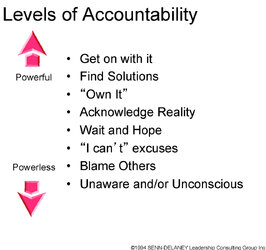
This is an accountability model I've used personally and in business for many years. One reason I've found it useful is that “Acknowledge Reality” is the point where we begin moving from powerless to powerful. That doesn't mean we like the reality, approve of it, or accept that its consequences are inevitable. It means we can't intelligently influence something until we're willing to see it as it actually is.This is a big read and I haven't finished it yet, but for me the problem was addressed here:
My opinion is that unless the AI takeover is not stopped, there will be no support for a productive economy. A company is setting itself up for an eventual death by utilizing and replacing humans in the workforce. You will have no customer base to purchase whatever product or service you provide if no one can afford your wares due to unemployment. Employment means taxation, governments (and programs) will fail without a solid tax base.
I believe the AI bubble will crash and burn hard unless humanity can come up with a better system than the monetary system we have. Everyone needs to work. For those that might say there's other means of employment that AI will not affect, look at it from a statistics viewpoint, you will have way too many plumbers competing for what little work that remains from the small percentage of people who are lucky enough to be employed.
The even bigger fear is what happens to society when all of the unemployed peoples needs are not being met by diminishing subsidies. (Advocating!) People will take what they need by force. A common and ridiculous misconception of the egotistical is that you can defend what you have..................you can't.
That's really why I posted the Gates article. Not because I'm advocating where AI may take us, but because I think understanding both its potential and its consequences is the first step toward deciding what we should do about it.
The next steps on this model are “Own It,” “Find Solutions,” and “Get on with it.” To me, that's where the useful AI discussion ultimately needs to go. What can individuals, businesses, communities and governments actually influence? What protections or policies make sense? What incentives should change? What do we want the future to look like, and what are we willing to do to help shape it?
We may disagree considerably about what AI ultimately means for society. But pretending the technology isn't advancing, or simply waiting to see what happens, doesn't give us much influence over the outcome.
.