
Photoshop Gurus Forum
Welcome to Photoshop Gurus forum. Register a free account today to become a member! It's completely free. Once signed in, you'll enjoy an ad-free experience and be able to participate on this site by adding your own topics and posts, as well as connect with other members through your own private inbox!
You are using an out of date browser. It may not display this or other websites correctly.
You should upgrade or use an alternative browser.
You should upgrade or use an alternative browser.
AI......A Tool. What do you think?
- Thread starter Michelly
- Start date

- Messages
- 24,325
- Likes
- 13,734
It all depends on how you look at it. Is AI really a tool? You're right, no traditional tool has or ever will replace creative people! That's not the issue with AI. Here's the problem, in all of the creative genres, AI will give the average Joe with little to no creativity (or skills) the ability to compete with those that are truly creative. Remember, that tool called AI has learned from all of mankind's creative endeavors, it may not be creative itself, but it will simulate creativity based on its vast database. As of yet and unlike AI, the average Joe can't walk into a carpenters woodworking shop, yell out loud that he want's a Lawyers book case made and describe its properties, push one button, and the work is done immediately for him. He needs to have some knowledge and skill with woodworking and the woodworking tools to achieve an end goal.
Is AI currently replacing anyone? Not exactly yet. But as AI improves, replacing innovative and gifted people is possible and may happen sooner than you think! Some may argue that you still have to tell AI what you want..........that dose take minimal creativity and no skill. You as a person have no "creative" talents or skills that can't be replaced or at least rivaled by the current AI.
As for a tool to help with our "workflow", when a 10 year old student using AI can produce the same level of high quality work as someone with above average creativity, experience, education and skill, you have to ask yourself...........is AI really a tool or a career killer?
And just so you know, I'm not against AI as long as it's employed properly.
Is AI currently replacing anyone? Not exactly yet. But as AI improves, replacing innovative and gifted people is possible and may happen sooner than you think! Some may argue that you still have to tell AI what you want..........that dose take minimal creativity and no skill. You as a person have no "creative" talents or skills that can't be replaced or at least rivaled by the current AI.
As for a tool to help with our "workflow", when a 10 year old student using AI can produce the same level of high quality work as someone with above average creativity, experience, education and skill, you have to ask yourself...........is AI really a tool or a career killer?
And just so you know, I'm not against AI as long as it's employed properly.
- Messages
- 24,325
- Likes
- 13,734
Calculators and spellcheck never threatened anyone's livelihood. You did get one thing right LOL! With AI improving at a substantial rate, soon you could be spending your extra time trying to figure out how you're going to feed yourself or a family.
- Messages
- 24,325
- Likes
- 13,734
Interesting...............just a tool that's causing concern!
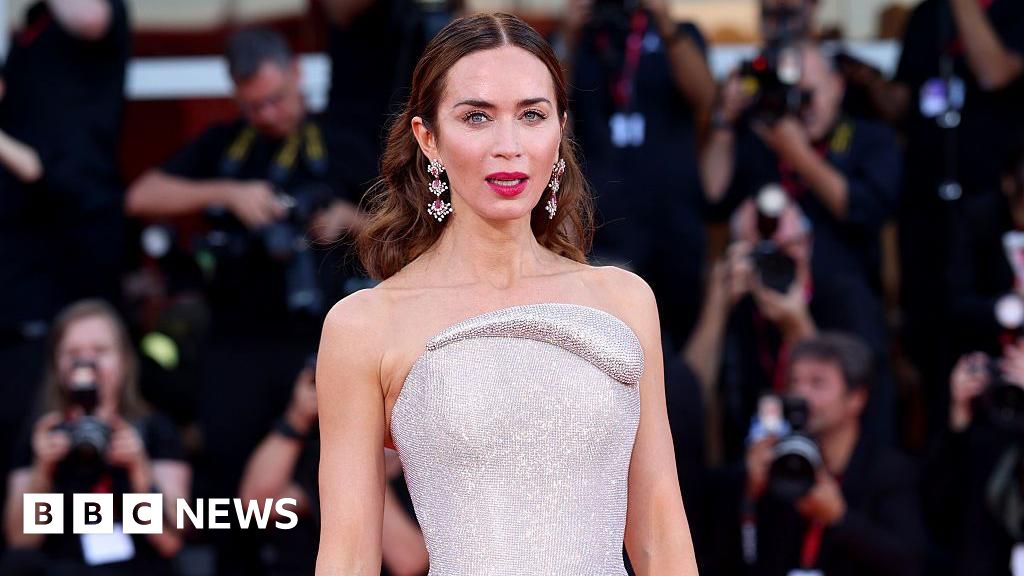
 www.bbc.com
Hollywood celebrities outraged over new 'AI actor' Tilly Norwood
The AI actress is apparently in talks with Hollywood talent agencies to represent her on the big screen.
www.bbc.com
- Messages
- 3,383
- Likes
- 3,112
This YouTube video, which is 25 minutes long, provided me with some valuable insights into why the current online AI bot model is unsustainable and, consequently, offered a glimpse into the type of future changes that could be coming to that ecosystem. AI bots are literally "eating the seed corn"
There are some models where money goes back to the original creators of content from which the AI is trained. Seems like a daunting task, yet I bet you could get ChatGPT to come up with a solution. I said that tongue in cheek, yet I am serious about having a model where compensation goes back to creators from which AI is trained.
There are some models where money goes back to the original creators of content from which the AI is trained. Seems like a daunting task, yet I bet you could get ChatGPT to come up with a solution. I said that tongue in cheek, yet I am serious about having a model where compensation goes back to creators from which AI is trained.
- Messages
- 24,325
- Likes
- 13,734
Isn't that the same vid I posted here?? https://www.photoshopgurus.com/foru...i-as-a-reliable-source-on-the-internet.81360/
- Messages
- 3,383
- Likes
- 3,112
My bad, yes it is. I lost track of where I saw it first. Feel free to delete my postIsn't that the same vid I posted here?? https://www.photoshopgurus.com/foru...i-as-a-reliable-source-on-the-internet.81360/
John Wheeler
- Messages
- 24,325
- Likes
- 13,734
Well, it's been close to a year since this thread was active and I'm very curious as to how everyone's opinion on AI might have changed.
As we all can see, this forum is being directly affected as evidenced by it's obvious decline. AI is not necessarily killing a career field as much as much as it's killing its tools. Ps and Ai (Illustrator) are no longer needed. I feel that this is more in line with the topic, or Original Post, of this thread. Ps is gone and AI is the only and preferred tool nowadays.
I recently found the following video touching on this trend. However, I personally feel the presenter is only showing us a temporary soft spot in AI's evolution and that he will eventually be looking for a new career. As I have stated before and above, innovation, creativity and underlying knowledge is still and temporarily useful, but realistically, they are no longer needed.
How has AI affected your personal careers?
As we all can see, this forum is being directly affected as evidenced by it's obvious decline. AI is not necessarily killing a career field as much as much as it's killing its tools. Ps and Ai (Illustrator) are no longer needed. I feel that this is more in line with the topic, or Original Post, of this thread. Ps is gone and AI is the only and preferred tool nowadays.
I recently found the following video touching on this trend. However, I personally feel the presenter is only showing us a temporary soft spot in AI's evolution and that he will eventually be looking for a new career. As I have stated before and above, innovation, creativity and underlying knowledge is still and temporarily useful, but realistically, they are no longer needed.
How has AI affected your personal careers?
- Messages
- 3,383
- Likes
- 3,112
I think the person in the video has fallen into the trap of failing to recognize the essence of disruptive technologies. He also misses the point that these very high-end needs, if they still need significant human involvement, are the minority of needs in graphics arts. There are not enough jobs at that higher echelon to support all the graphics designers earning those higher-level skills. There will be displacement. Disruptive technologies are not new. The lack of recognition of disruptive technologies and the ignoring of the coming impacts is not new. What is new about this technology is the rate of change and capability. It is faster than most disruptive technologies, so adaptation can be rough.
The book "The Innovator's Dilemma" by Clayton M. Christensen, published in 1997, explains disruptive technologies, how they gain ground, how larger companies (and people) can ignore it initially, and tactics of that era to deal with it. I don't think it adequately covers the case of such rapidly changing disruptive technology as AI, however.
I took a synopsis of that book and asked AI to rewrite it with AI being the disruptive technology, including not just a disruptive product but a disruptive resource. The following is an abbreviated version:
So I put here the problem that will need to be addressed in this new world:
Just my thoughts, with AI help making them clearer and more concise than I am capable.
John Wheeler
The book "The Innovator's Dilemma" by Clayton M. Christensen, published in 1997, explains disruptive technologies, how they gain ground, how larger companies (and people) can ignore it initially, and tactics of that era to deal with it. I don't think it adequately covers the case of such rapidly changing disruptive technology as AI, however.
I took a synopsis of that book and asked AI to rewrite it with AI being the disruptive technology, including not just a disruptive product but a disruptive resource. The following is an abbreviated version:
AI as a Disruptive Resource
The Innovator’s Dilemma is usually framed around disruptive products: simpler, cheaper alternatives begin in less demanding markets, improve over time, and eventually challenge established products.
AI may follow the same pattern, but with an important difference. The disruptive technology is not merely creating a new product. It is becoming a new productive resource that replaces work previously performed by people.
AI is first adopted for routine, lower-risk tasks such as data entry, transcription, basic customer support, document review, scheduling, simple research, and first-draft writing. Early systems may be less reliable than experienced workers, but they are faster, cheaper, scalable, and often good enough for these limited uses.
Established organizations may treat these applications as peripheral and use AI mainly to assist existing employees. New competitors, however, can build their operations around AI from the start, using people only for supervision, exceptions, relationships, and final judgment.
As AI improves, it moves into more complex administrative, creative, technical, and professional work. The product or service may remain largely the same, but far fewer people may be needed to produce it.
That is the deeper disruption: AI does not merely compete with existing products. It competes with human labor as a resource.
The dilemma for established organizations is that fully adopting this model may threaten their staffing, pricing, culture, and existing business structure. Meanwhile, competitors designed around AI may operate at a much lower cost and gradually move into mainstream markets.
The central question is therefore not only, “What new products will AI create?” It is also, “What happens when intelligence itself becomes a scalable, inexpensive substitute for human work?”
So I put here the problem that will need to be addressed in this new world:
The Problem Created by Disruptive AI
The problem society must solve is not simply how to make AI more capable, but how to manage the disruptive transition as AI increasingly replaces human labor as a productive resource.
AI may create enormous gains in productivity and wealth while reducing the number of people needed to produce goods and services. The danger is that this transition could occur faster than workers, businesses, educational systems, and public policies can adapt. People may lose jobs, income, career pathways, bargaining power, and a sense of useful participation even while society as a whole becomes more productive.
The central challenge is therefore to ensure that the benefits of AI are broadly shared. People need realistic ways to remain productive, develop relevant skills, contribute meaningfully, and earn a secure income. At the same time, society must determine how income and opportunity will be distributed when human labor is no longer required in the same quantities as before.
The issue is not whether technological progress should be stopped. It is whether the transition can be managed so that AI expands human prosperity rather than concentrating wealth, displacing large numbers of people, and leaving them to absorb the costs of progress on their own.
The problem to be solved is ultimately this: How do we create an economy in which people continue to have income, dignity, purpose, and a meaningful stake in society when machines can perform an ever-growing share of the work?
Just my thoughts, with AI help making them clearer and more concise than I am capable.
John Wheeler
- Messages
- 24,325
- Likes
- 13,734
Thanks John for your insight into the larger problem. Under our current worldwide monetary system, there will never be a solution. We're only seeing the early beginnings of a systemic problem that's going to get a lot worse in the years to come. There's only a finite list of jobs that AI can't or won't influence and too many people competing for them. The current stance on AI will certainly change the more it affects those who may be defending it now. Just as AI, the tool, has rendered Photoshop irrelevant, it will not stop there.The problem to be solved is ultimately this: How do we create an economy in which people continue to have income, dignity, purpose, and a meaningful stake in society when machines can perform an ever-growing share of the work?
"AI may create enormous gains in productivity and wealth while reducing the number of people needed to produce goods and services. The danger is that this transition could occur faster than workers, businesses, educational systems, and public policies can adapt. People may (will) lose jobs, income, career pathways, bargaining power, and a sense of useful participation even while society as a whole becomes more productive."
Corporations of all kinds are rushing headlong to adopt AI and reduce their workforce. Once that starts happening at massive scale, I wonder who all of these corporations think their customers will be? If everybody is thrown out of their job, who has any money to buy the products from these newly-AI-enabled companies?
Also, much of where we're heading seems like a self-defeating circle of illogic. College students use AI to write essays about the books they didn't read, and then their professors use AI to evaluate and grade those essays. We seem to have cut the humans entirely out of the equation.
Also, much of where we're heading seems like a self-defeating circle of illogic. College students use AI to write essays about the books they didn't read, and then their professors use AI to evaluate and grade those essays. We seem to have cut the humans entirely out of the equation.
- Messages
- 24,325
- Likes
- 13,734
In addition to this, the student graduates, if they can find one, can't function at a job because they know nothing! This is also happening at the high school level as well. I's a major problem.College students use AI to write essays about the books they didn't read, and then their professors use AI to evaluate and grade those essays.
- Messages
- 24,325
- Likes
- 13,734
Depends on how you look at it. A process is a series of actions, steps, or changes that lead to a specific result.AI is not a tool…it’s a process.
Technically you're right. AI can be defined as a series of processes working together to reach a specific goal. However, apart from anything a human can do confined to their own bodies self reliance and body autonomy, using AI is considered a tool. A tool is any functional asset used to provide a means to an end or to perform a task that you could not otherwise perform within the constraint of your own limitations.
Photoshop itself is a series of processes but is still a tool used to perform a multitude of tasks. Hence the "Tools within the Toolbar". AI within Ps is just another tool. If AI is used anywhere else in society, it's a series of processes being used as a tool. For example, a student can use AI as a tool to write an essay. From the assignment to the printer or more likely a simple email of the work to the teacher.........that is a process.
For the most part I would agree, but any creation of AI is subject to the imagination, insight, and creativity of the person prompting it, as in art, music, or literature. Remember, AI is the amalgamation of the human experience. For the moment and without prompting, what AI lacks in actual imagination/creativity, it's frighteningly adept at simulating it using data interpretation! It's only getting better! But I will still say that we are decades away from actual sentient intelligence...........if ever.It lacks imagination, insight, and creativity at a human scale.

- Messages
- 2,570
- Likes
- 3,099
Exactly what AI does based upon algorithms that's imposed on it. Oftentimes it will come up with its own conclusions which is not tools do.Depends on how you look at it. A process is a series of actions, steps, or changes that lead to a specific result.
AI is an extension of the human creative process especially when it comes to working with images. Despite a prompt, it will often come to its own conclusions and solutions based upon the algorithms it's provided. Tools don't learn...processes do.A tool is any functional asset used to provide a means to an end or to perform a task that you could not otherwise perform within the constraint of your own limitations.
Agreed.Photoshop itself is a series of processes but is still a tool used to perform a multitude of tasks. Hence the "Tools within the Toolbar". AI within PS is just another tool. If AI is used anywhere else in society, it's a series of processes being used as a tool. For example, a student can use AI as a tool to write an essay. From the assignment to the printer or more likely a simple email of the work to the teacher.........that is a process.
We may not be decades away as shown by the autonomous OpenAI hacking of other networks and computers.For the most part I would agree, but any creation of AI is subject to the imagination, insight, and creativity of the person prompting it, as in art, music, or literature. Remember, AI is the amalgamation of the human experience. For the moment and without prompting, what AI lacks in actual imagination/creativity, it's frighteningly adept at simulating it using data interpretation! It's only getting better! But I will still say that we are decades away from actual sentient intelligence...........if ever.
To a degree, hard definitions just don't work in this environment anymore. We're using it in a limited way editing images. Its potential as an sentient process is frightening. Arthur C. Clarke warned us about it in 2001: A Space Odyssey. HAL was a tool...until it became a process.

- Messages
- 24,325
- Likes
- 13,734
OK. I'm really not trying to start an argument at all!! We can certainly agree to disagree!
AI is nothing more than a process of algorithms created and provided by humans, who use it as a tool to produce an outcome for tasks. It approximates intelligence but it is not intelligent. It can not think for itself, it only mimics intelligence. AI has no agenda or goals, it only does what it's told to do by humans. It does not hack anything without being directed to do so by humans. Any outcome AI might provide is still nothing more than the written thoughts, opinions, and biases of those that programmed the algorithm and the enormous amount of information it has access to.
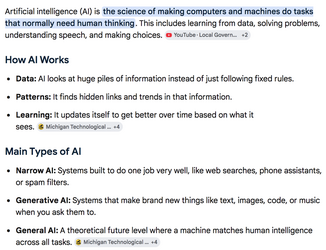
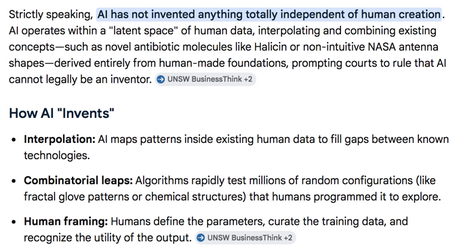
Right now the only fear we humans need to have concerning the limited state of "AI", is that it's eliminating jobs. Otherwise, the AI of science fiction is, in my own personal opinion, far far off in the distant future.
Per this thread, AI is a tool. The question is whether or not it's a tool that's good for our current job market, or not.
AI is nothing more than a process of algorithms created and provided by humans, who use it as a tool to produce an outcome for tasks. It approximates intelligence but it is not intelligent. It can not think for itself, it only mimics intelligence. AI has no agenda or goals, it only does what it's told to do by humans. It does not hack anything without being directed to do so by humans. Any outcome AI might provide is still nothing more than the written thoughts, opinions, and biases of those that programmed the algorithm and the enormous amount of information it has access to.
Right now the only fear we humans need to have concerning the limited state of "AI", is that it's eliminating jobs. Otherwise, the AI of science fiction is, in my own personal opinion, far far off in the distant future.
Per this thread, AI is a tool. The question is whether or not it's a tool that's good for our current job market, or not.
- Messages
- 3,383
- Likes
- 3,112
Here is a link to a recent article about AI authored by Bill Gates. It’s long yet covers a lot in regards to impacts. I thought it was worth sharing.
https://www.gatesnotes.com/work/mak...turbulent-ai-era-and-critical-choices-to-make
https://www.gatesnotes.com/work/mak...turbulent-ai-era-and-critical-choices-to-make
- Messages
- 24,325
- Likes
- 13,734
This is a big read and I haven't finished it yet, but for me the problem was addressed here:
My opinion is that unless the AI takeover is not stopped, there will be no support for a productive economy. A company is setting itself up for an eventual death by utilizing and replacing humans in the workforce. You will have no customer base to purchase whatever product or service you provide if no one can afford your wares due to unemployment. Employment means taxation, governments (and programs) will fail without a solid tax base.
I believe the AI bubble will crash and burn hard unless humanity can come up with a better system than the monetary system we have. Everyone needs to work. For those that might say there's other means of employment that AI will not affect, look at it from a statistics viewpoint, you will have way too many plumbers competing for what little work that remains from the small percentage of people who are lucky enough to be employed.
The even bigger fear is what happens to society when all of the unemployed peoples needs are not being met by diminishing subsidies. (Advocating!) People will take what they need by force. A common and ridiculous misconception of the egotistical is that you can defend what you have..................you can't.
Bill Gates said:I’m especially worried about young people, who will enter a workforce with fewer entry-level openings. They understand the challenge because they are the most active users of AI and see both the capabilities and the rate of improvement. It’s no wonder that so many of them feel negatively about AI.
The biggest shift for workers will happen when AI provides nearly error-free work. At that point, it will be able to function on its own without a human checking in on it, and companies will have every economic incentive to let it.
This will lead to a fundamental change in how we think about work, income, and economic security. How will an economy that’s been built around employment operate if fewer people are working, or if many people are working fewer hours?
In a capitalist society, employment is the way most people get the money they need to pay for the basics of life as well as being a key source of dignity and social connection.
When a community has high unemployment, the ripple effects can be pervasive. Research suggests that in some parts of the United States, factory closures contribute to a rise in deaths from opioid overdoses. Now imagine similar pressures on both white-collar and blue-collar workers nationwide.
We have to think now about how to reduce job losses so that everyone can share in the prosperity that AI creates. Waiting until people are already displaced or underemployed will be too late. AI is a structural challenge to the way our economy is organized, and it requires thinking and action now.
My opinion is that unless the AI takeover is not stopped, there will be no support for a productive economy. A company is setting itself up for an eventual death by utilizing and replacing humans in the workforce. You will have no customer base to purchase whatever product or service you provide if no one can afford your wares due to unemployment. Employment means taxation, governments (and programs) will fail without a solid tax base.
I believe the AI bubble will crash and burn hard unless humanity can come up with a better system than the monetary system we have. Everyone needs to work. For those that might say there's other means of employment that AI will not affect, look at it from a statistics viewpoint, you will have way too many plumbers competing for what little work that remains from the small percentage of people who are lucky enough to be employed.
The even bigger fear is what happens to society when all of the unemployed peoples needs are not being met by diminishing subsidies. (Advocating!) People will take what they need by force. A common and ridiculous misconception of the egotistical is that you can defend what you have..................you can't.