I have quite the propensity to say too much or write so much and sometimes put it through AI to make it more concise. I did not do that here (so that's a heads up).
Thanks for the thoughtful questions. They are certainly relevant, but I'd like to approach them from the same market perspective I was attempting to introduce in my earlier post.
The question of how good today's AI editing tools are, or how skilled their users may be, is important. But I think concentrating on those questions can cause us to overlook the larger implications of a disruptive technology.
My central point is that the marketplace for images will continue to exist, but the ways in which the different segments of that marketplace are served will change.
Some customers will continue to demand the highest levels of craftsmanship, control, authenticity, and artistic judgment. Others will be perfectly satisfied with an image that meets their needs at a lower cost, with less effort, or in much less time.
The market ultimately determines which combination of quality, cost, speed, creativity, and other attributes is valuable enough to pay for.
That brings us back to Christensen's
The Innovator's Dilemma.
One of the important lessons from disruptive innovation is that the new technology doesn't have to be as good as the established technology in every respect to begin changing a market.
It only needs to be good enough to satisfy the requirements of some market segments, often ones that established providers consider less attractive.
As the technology improves, it can begin satisfying the requirements of additional segments. The boundaries between those segments can shift, sometimes considerably.
So the important question isn't simply whether today's AI tools or their users can match a skilled Photoshop professional. It's how many customers currently require that professional's level of skill, and how that number might change as the alternatives improve.
That distinction has implications for two groups.
First, the software companies.
Companies like Adobe, DxO, Capture One, and others need to consider not just how to improve their existing products, but how the needs of the overall image marketplace are changing.
Adding AI capabilities to existing software may be part of the answer, but it may not be the entire answer. If increasing portions of the marketplace can be served by simpler, cheaper, or entirely different methods, the business models supporting today's products could change.
The question is not necessarily whether Adobe can build better software than a new competitor. It is whether the marketplace will continue to place sufficient value on what Adobe offers, and whether Adobe can successfully serve the emerging opportunities.
Second, the people who use these products, particularly those who earn their living in the image business.
I think they face a similar challenge.
Someone with considerable experience in traditional post-processing may possess valuable skills and artistic judgment. Those abilities don't suddenly disappear because AI comes along.
But the marketplace's willingness to pay for the application of particular skills can change.
For example, if AI makes a certain level of photo editing inexpensive and widely accessible, customers who previously paid professionals for that work may no longer need to. Meanwhile, other market segments may continue to place a premium on human judgment, creative direction, authenticity, consistency, or specialized expertise.
There may also be entirely new opportunities that don't exist today.
For those who enjoy photography and post-processing as a hobby, none of this necessarily requires any change. The enjoyment of the process is itself the objective. They can continue using whatever tools and techniques give them satisfaction.
But for someone whose livelihood depends on producing or processing images, I think the implications are different.
The challenge becomes understanding which parts of the marketplace will continue to value your skills, which parts are changing, and what additional capabilities might be needed to remain relevant.
That could mean learning AI tools, developing new services, moving into market segments where human expertise remains especially important, or combining established photographic skills with emerging technologies.
Regarding professional standards, certification, or licensing, I can see value in establishing competencies, especially where accuracy, authenticity, safety, or professional accountability matter.
But I would distinguish standards that protect customers from those intended primarily to protect existing practitioners from competition.
Certification may help customers identify qualified professionals. However, it does not necessarily prevent a disruptive technology from changing what customers need or are willing to pay for. Nor does it guarantee that the skills being certified will retain their present market value.
And this is really the larger point I'm trying to make.
The most important question may not be whether AI can do what skilled post-processors do today. It may be whether the marketplace will continue to need those same things done in the same way, and in the same quantities, five or ten years from now.
That is the question software companies need to consider when planning their futures.
And I think it is equally important for people who depend economically on those software products and their own expertise.
The Innovator's Dilemma is valuable precisely because it encourages us to think beyond the limitations of today's technology and examine how markets evolve as technologies improve.
I'm not predicting the demise of Adobe or professional post-processing. I'm suggesting that understanding how disruptive innovation unfolds may be more useful than trying to determine whether today's AI tools are already good enough to replace today's skilled practitioners.
Rather than debating whether AI is good enough to replace the skills we have today, shouldn't we be asking which of those skills the marketplace will continue to pay for tomorrow, and what new skills or services that marketplace may begin to value?
Well, I did give you a heads-up about post length

I might be reacting to posts I see (mostly on other forums) where there is a lot of grousing about AI and that such images are just simulations of real photos and that they don't contain the human factor that skilled folks can bring to the table. That is valid, yet it doesn't acknowledge that new tools affect the marketplace and the market value of a given set of skills over time. That is why I am encouraging a heads-up approach to what is happening as opposed to what I see on some forums, which are more akin to burying one's head in the sand.
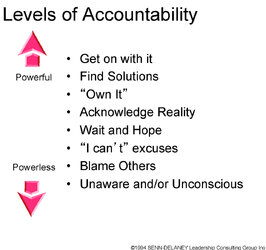
Without repeating it here, it goes back to the prior slide I posted about Levels of accountability.
I will add another post with an analogy, yet will stop here due to length.
John Wheeler